Employee accommodation can directly affect workforce wellbeing, operational efficiency and project delivery. For employers managing on-site teams, selecting the right housing solution is often an important operational decision.
Two common options are portable cabins and traditional dormitories. While both can be used for employee accommodation, they differ in terms of comfort, cost, flexibility and setup time.
How Do Portable Cabins Compare with Traditional Dormitories?
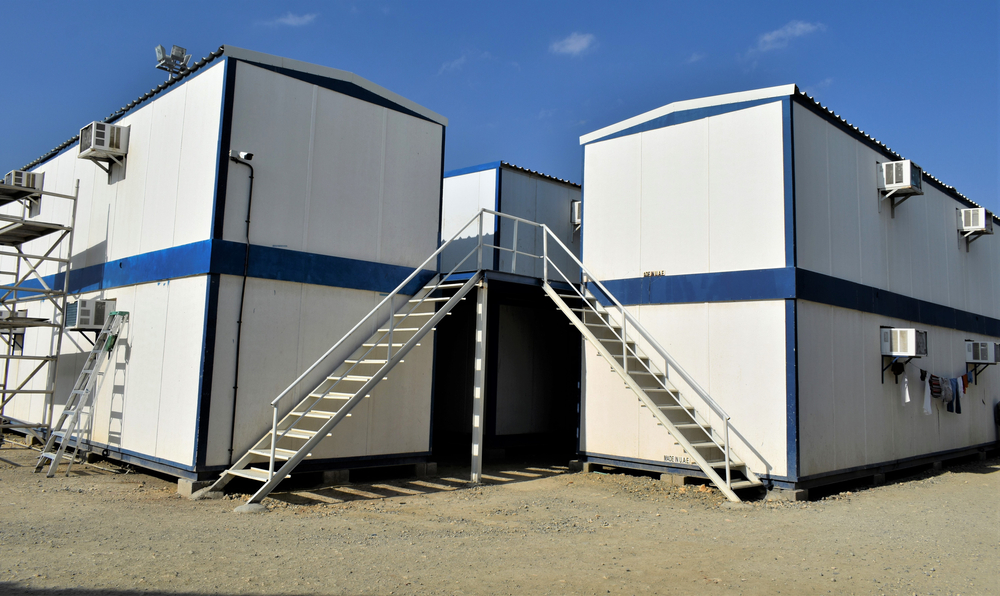
A portable cabin is a prefabricated structure designed for easy transport and installation across different locations. It is commonly used for temporary or semi-permanent employee accommodation, especially in remote sites, construction areas and project-based operations.
Traditional dormitories, on the other hand, are purpose-built accommodation facilities constructed on-site. They are usually intended for long-term occupancy and are often used to house larger workforces in fixed or permanent locations.
How Do Portable Cabins and Traditional Dormitories Differ?
Portable cabins and traditional dormitories can both be used for employee accommodation, but they differ in setup time, flexibility, site requirements and long-term suitability.
Comfort and Living Conditions
Portable cabins can be fitted with sleeping areas, washrooms, air-conditioning and shared facilities to support daily living needs. Traditional dormitories may offer larger communal spaces and more permanent accommodation capacity, making them suitable for long-term workforce housing.
Setup Time
Portable cabins are manufactured off-site and delivered for installation, enabling faster deployment. Traditional dormitories require site preparation, construction and commissioning before they are ready for occupancy.
Flexibility and Scalability
Portable cabins offer greater flexibility because additional units can be added, relocated or removed as workforce needs change. In contrast, expanding a traditional dormitory usually requires additional construction work.
Site Requirements
Portable cabins typically require less site preparation and may be suitable for remote or temporary project locations. Traditional dormitories often need more extensive construction work and supporting infrastructure.
Cost Considerations
Portable cabins may help reduce construction time, labour requirements and some upfront costs. Traditional dormitories usually involve higher initial construction costs but may be more suitable for long-term accommodation needs.
Choosing the Right Employee Accommodation Solution
The better option depends on your project duration, workforce size, site location, and whether your accommodation needs are temporary or long-term. Use the checklist below to guide your decision.
When Portable Cabins May Be More Suitable
Portable cabins may be the better option for organisations that need a practical and adaptable accommodation setup.
They are especially useful when:
- The project is short-term or temporary. Portable cabins provide accommodation without the need to invest in permanent housing infrastructure.
- The site is remote. Units can be transported to locations where nearby accommodation is limited.
- Workforce size may change. Additional units can be added, removed or reconfigured as manpower requirements shift.
- Accommodation is needed quickly. Since cabins are prefabricated, they can often be deployed faster than conventional buildings.
- Operations span multiple sites. Portable cabins can be relocated and reused across different project locations.
When Traditional Dormitories May Be More Suitable
Traditional dormitories may be more appropriate for organisations with stable, long-term accommodation requirements.
They may be a better fit when:
- The workforce is based in one fixed location. Permanent housing may be more practical when operations are unlikely to move.
- There is a large employee population. Dormitories can accommodate more occupants within a single planned development.
- Accommodation is required for the long term. Purpose-built facilities may better support ongoing workforce housing needs.
- The site is part of an established industrial facility. Permanent dormitories can be integrated into broader site infrastructure.
- Future expansion is planned. Dormitories can be included as part of long-term facility development plans.
In general, portable cabins are better suited for speed, flexibility and changing project needs, while traditional dormitories are more suitable for large-scale, long-term workforce accommodation.
Portable Cabins for Employee Accommodation
If your organisation needs a quick, flexible and scalable solution for employee accommodation, portable cabins offer a practical option. They are especially useful for temporary projects, remote worksites and changing workforce requirements, as they can be deployed quickly and adapted as operational needs evolve.
At Solid Horizon, we provide portable cabin solutions for workforce accommodation, site facilities and temporary housing requirements. Contact us today to learn more.
Frequently Asked Questions
Depending on the design, portable cabins can be equipped with amenities such as sleeping quarters, washrooms, air-conditioning and communal facilities.
Yes. Both portable cabins and traditional dormitories can be designed to meet applicable accommodation and safety requirements.
Start by considering the number of occupants, required facilities, available site space and how the cabin will be used. These factors help determine a suitable size and layout for daily operations.
The number of occupants depends on the cabin’s size, layout and intended use. Our team at Solid Horizon can recommend a suitable configuration based on workforce numbers and applicable accommodation requirements.