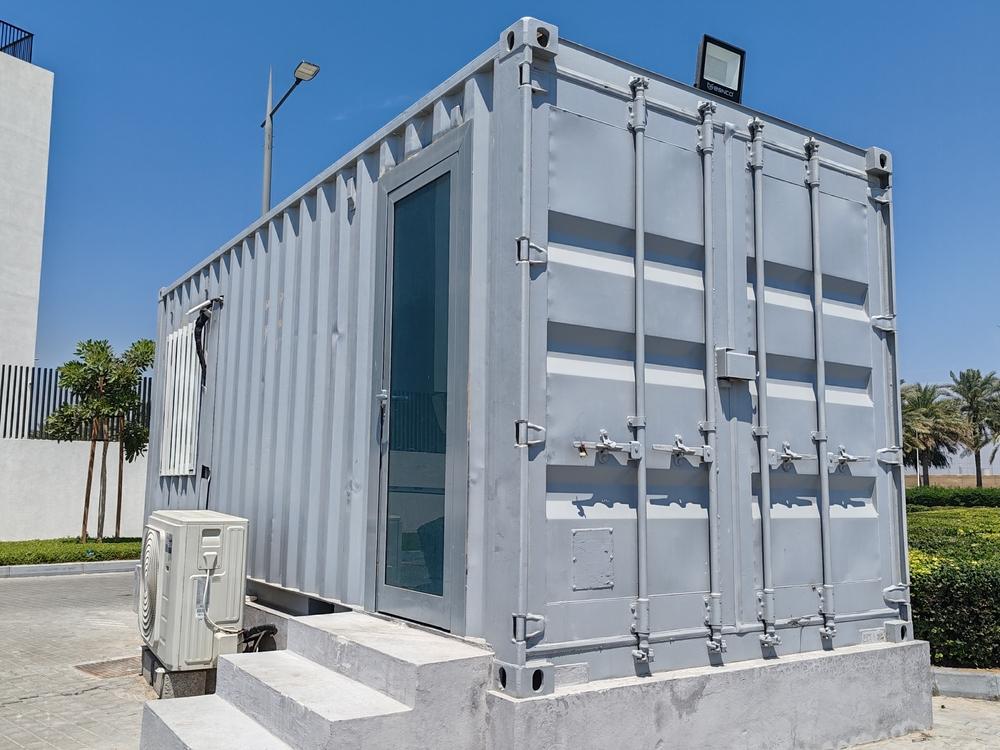
A container site office provides a controlled environment for managing construction operations. It supports coordination, planning and administrative work directly on-site, reducing the need for off-site facilities.
Modern units are designed to function as complete workspaces rather than basic shelters. Their features are focused on maintaining safety, supporting daily operations and ensuring consistent performance under site conditions.
Key Takeaways
- Container site offices are designed to provide a stable and functional workspace in demanding environments
- Structural durability and weather resistance are essential for maintaining safe operations
- Thermal comfort and ventilation support productivity, particularly in tropical climates
- Integrated electrical and data systems allow immediate use as a working office
Structural Durability and Weather Resistance
A container site cabin must remain reliable in challenging environments. From heavy rain to prolonged heat exposure, the structure needs to protect both personnel and essential equipment while maintaining a stable working environment.
To achieve this, these units are constructed using reinforced materials designed for long-term use. Steel frameworks provide the core strength, ensuring the cabin remains secure even under constant activity.
Key structural features include:
- Corrosion-Resistant External Shells
High-quality steel panels are treated to resist rust, which is especially important in humid and coastal climates.
- Reinforced Flooring Systems
Robust floor structures are designed to support office furniture, storage units and frequent movement throughout the day.
- Advanced Weatherproofing
Sealed joints around roofs, doors and windows help prevent water ingress during heavy rainfall.
- Stackable Frameworks
Standardised corner fittings allow units to be securely connected or stacked, making multi-level office configurations possible.
Thermal Comfort and Ventilation
Indoor conditions have a direct impact on how effectively a team can work. In warm and humid climates, poor ventilation or heat build-up can affect both comfort and equipment performance. Container offices are designed to manage these factors through a combination of insulation and airflow control.
Key features include:
- High-Density Insulation
Materials such as mineral wool or polyurethane panels reduce heat transfer from the external environment.
- Pre-Installed HVAC Points
Dedicated mounts and electrical connections allow for quick installation of air conditioning units.
- Strategic Window Placement
Windows are positioned to bring in natural light while supporting cross-ventilation when needed.
- Condensation Control
Interior finishes help reduce moisture build-up, protecting documents and electronic equipment over time.
Integrated Electrical and Communication Systems
A site office must be ready for immediate use once installed. This requires built-in systems that support both administrative and digital functions. In most cases, electrical and communication infrastructure is incorporated during production, allowing the unit to operate as a functional workspace without additional setup.
Key features include:
- Concealed Electrical Wiring
Power systems are built into the structure, providing safe and convenient access to sockets for office equipment.
- Data and Communication Ports
Pre-installed connections support internet and telephone systems, allowing seamless integration with site networks.
- Energy-Efficient Lighting
LED lighting provides consistent illumination while helping to manage energy consumption.
- Safety Switchgear
Circuit breakers and earth-leakage protection systems help maintain a safe working environment.
Security and Operational Accessibility
A site office must protect valuable assets while remaining easy for authorised personnel to access throughout the day. Container units are designed to balance these requirements by combining secure construction with practical entry features.
- Industrial Steel Doors
Heavy-duty doors with secure locking systems help deter unauthorised entry.
- Window Security Grilles
Reinforced grilles or shutters add an extra layer of protection when the site is not in use.
- Adjustable Foundation Mounts
Levelling systems ensure the cabin remains stable, even on uneven ground.
- Anti-Slip Entryways
Durable steps and entry platforms provide safe access in wet or muddy conditions.
Designed to Support Efficient Site Management
A container site office plays a central role in maintaining organisation on a construction site. By combining structural strength, environmental control and integrated systems, these units provide a workspace that supports both short-term tasks and longer project phases. As site requirements change, modular configurations can also be adjusted to suit evolving needs.
With over 30 years of industry experience, Solid Horizon delivers container site offices designed for reliability and flexibility, from single units to multi-storey configurations. If you are planning your next project or refining your site setup, reach out to our team to see how the right office solution can support your operations.
Frequently Asked Questions
Although the structure is robust, it is advisable to secure or remove loose furniture and heavy equipment before relocation to prevent internal damage.
Standard units are typically available in 20-foot and 40-foot lengths. These can be combined to create larger layouts depending on your needs.
Yes, interiors can be tailored with different flooring materials, wall finishes and built-in fittings to suit functional or branding requirements.
Most modern units are pre-fitted with data cabling that can be easily connected to external modems, routers or site-wide Wi-Fi mesh systems.
Requirements vary by location and the expected duration of use. It is best to check with local authorities before installation.